
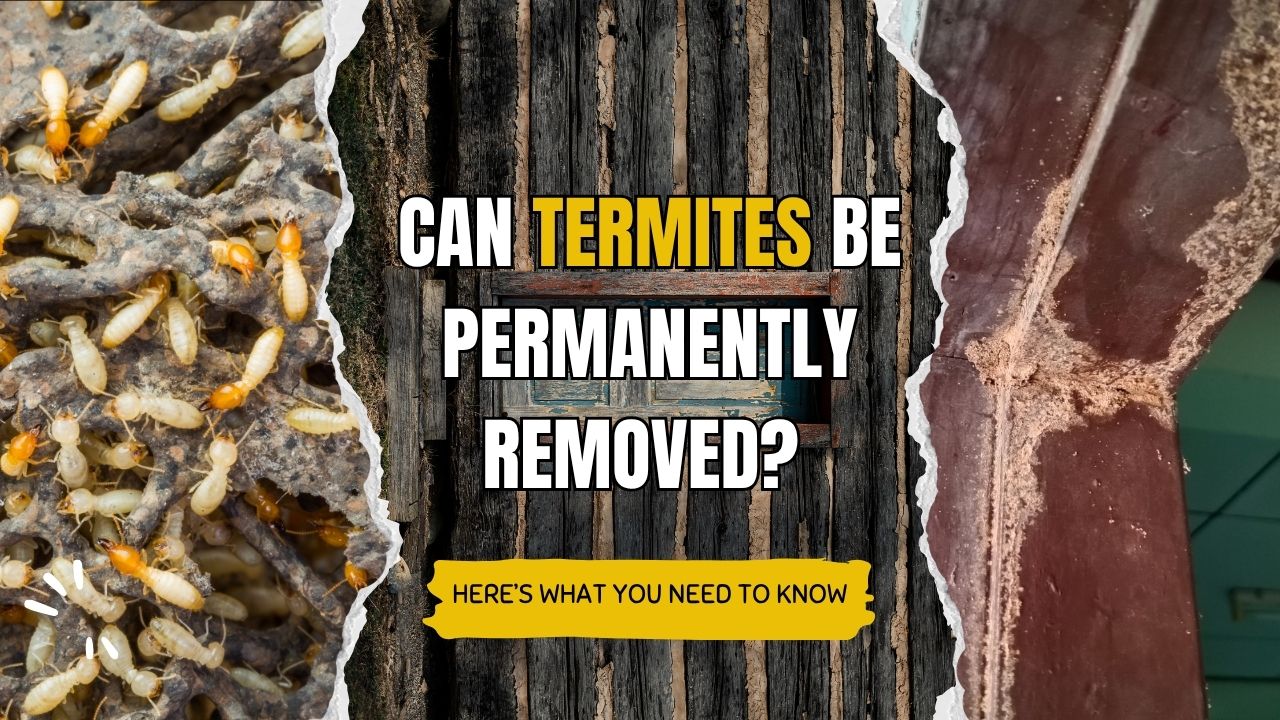
Can Termites Be Permanently Removed? Here’s What You Need to Know
Termites are the silent destroyers that can eat away at your home without making a sound, often for months before you even realise what’s happening. So, can termites be permanently removed? Yes, but it takes consistent effort, professional help, and smart preventive measures.
In this post, we will learn what termite infestations are, how to get rid of them, and what it takes to keep them away for good.
What Termites Are and Why They Keep Coming Back
Termites are eusocial insects that live in colonies. You can often find them hidden underground or inside wood. They feed on cellulose—wood, paper, cardboard—and moisture makes their lives easier. An established termite colony can have thousands of workers and reproduce rapidly.
Even after treatment, termites may return if:
- The source of moisture isn’t corrected (leaky pipes, poor drainage, etc.).
- Wood touches soil due to improper landscaping or structural issues.
- There were hidden satellite colonies that weren’t reached by treatment.
- Preventive barriers and inspections aren’t maintained.
Methods to Remove Termites Permanently
There are several proven methods to remove termites permanently. Each plays an important part. When used together, they increase the success rate of winning against termites.
1. Professional Chemical Treatments
Licensed pest control professionals use termiticides either as liquid barrier treatments or as bait systems. Liquid treatments create a chemical zone around your home; termites that cross it die. Bait systems lure termites to a bait with insecticide, which they carry back to the colony.
Pros:
- Reach hidden termites underground or in wood.
- Professional-grade chemicals are more effective than over-the-counter solutions.
Cons:
- It can be expensive.
- You need to apply it properly and maintain it over time.
2. Physical Measures and Wood Treatments
Besides chemical treatments, physical methods play a vital role in keeping termites away. Here they are:
- If any wood is already damaged by termites, replace it immediately.
- Opt for naturally resistant options or go for pressure-treated wood.
- Seal the tiny gaps around windows, doors, and foundations that act as an open invitation for termites.
- Get rid of damp and poorly ventilated spaces. Let the air flow in the crawl spaces, basements, and other places to lower the humidity level.
3. Moisture Control
Termites thrive in damp conditions. Therefore, reducing moisture is vital.
- Fix roof leaks, pipe leaks, and moisture issues promptly.
- Use dehumidifiers in damp areas.
- Make sure that the soil slopes away from the foundation.
- Clear gutters to prevent water accumulation.
Long-Term Prevention and Monitoring
Permanent removal is about destroying the current infestation as well as preventing future infestations. Here’s how to maintain termite-free conditions over the years.
Regular Inspections
Early detection helps catch re-infestations before they become serious. Hiring professionals to inspect your property on an annual basis is therefore essential. They generally check for:
- Mud tubes on foundation walls.
- Hollow-sounding wood.
- Frass (termite droppings).
- Moisture issues around foundations and wood.
Ongoing Preventive Treatments
- Keep protective barriers and bait stations active.
- Monitor and replace termiticide if barrier effectiveness drops over time.
- Treat wood surfaces with borate solutions or other preservatives.
Landscaping and Exterior Maintenance
- Avoid wood-to-soil contact: Keep firewood, mulch, or wood siding off the ground.
- Use gravel or metal flashing between soil and wood structures.
- Trim back plants and bushes so that wood siding and windows are clear of vegetation.
Realistic Expectations and Costs
Costs vary widely depending on property size, type of treatment, and region. Getting multiple quotes from reputable pest control firms helps. Always ask about warranties or guarantees. Some companies offer long-term service agreements that monitor re-infestation.
While many treatments can eliminate termites, claiming 100% guarantee under all conditions is unrealistic. Success depends on:
- Severity of infestation.
- Location and soil conditions.
- How well preventive measures are followed.
- Quality and frequency of professional services.
Wrapping Up
In conclusion, can termites be permanently removed? Yes, but only with a comprehensive strategy. Treat the infestation fully, correct environmental factors, and maintain ongoing protection. Without all three, termites might come back.
Hence, take action promptly, consult professionals, and make prevention a habit. This way, you can give yourself the best chance of keeping your home termite-free for years to come.