
Flying Termites: Signs, Causes, Treatment and Prevention
Introduction
Flying termites can appear suddenly, especially during warm and humid weather. Seeing a group of winged insects indoors may be alarming, but it does not always mean your home has severe damage. However, flying termites can signal that a mature termite colony is nearby or already inside a building. Understanding their appearance, causes, warning signs, and treatment options can help you act early and protect your property from costly structural damage.
What Are Flying Termites?
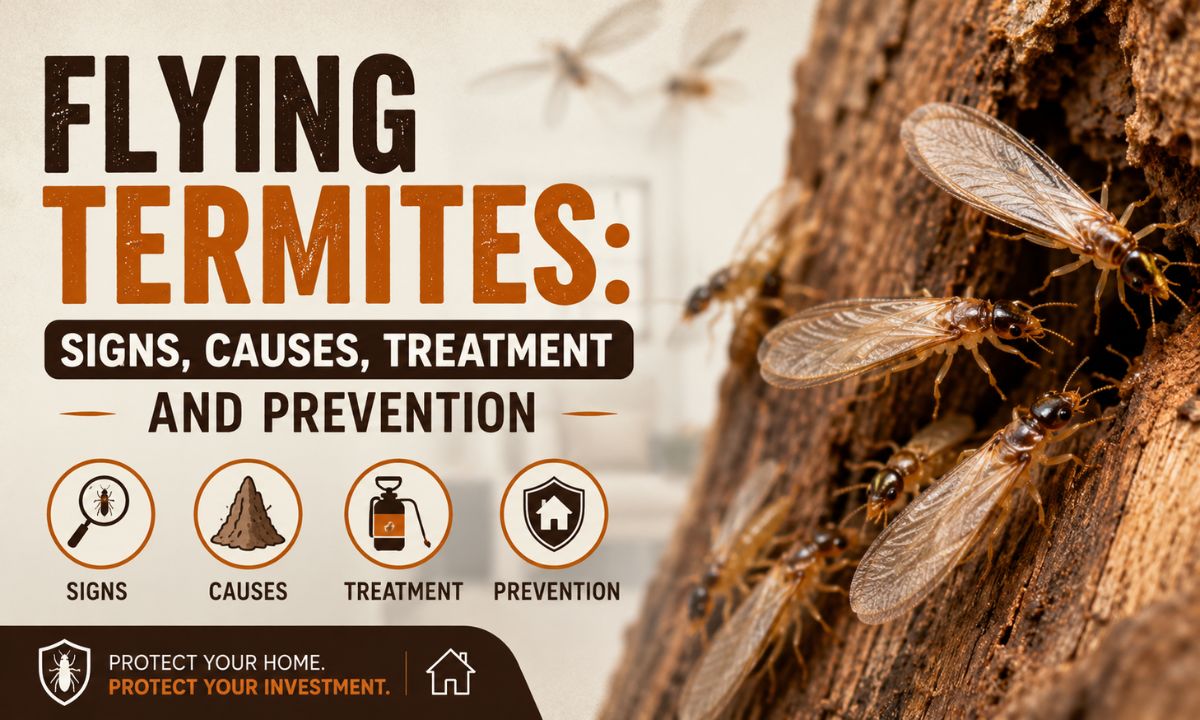
Flying termites are reproductive termites, also called alates, that leave a mature colony to start new colonies. They usually have two pairs of long, equal-sized wings and a straight body with straight antennae. They are often seen in large groups during a swarming event. After finding a suitable place, they shed their wings and begin forming a new colony. Flying termites may come from soil, wooden structures, wall spaces, or hidden nests. Their presence can indicate an active termite infestation nearby, so they should not be ignored. Their main purpose is reproduction, not feeding on wood.
How to Identify Them
Flying termites are usually small insects with soft, straight bodies, straight antennae, and two pairs of wings that are similar in size and shape. Their wings are often longer than their bodies and may break off easily after swarming. They can be pale brown, cream, or dark brown, depending on the species. You may notice them around windows, doors, lights, balconies, wooden furniture, or damp areas. Look for piles of discarded wings on floors or window sills. This is one of the clearest signs that termites have recently swarmed nearby.
Flying Termites vs Flying Ants
Flying termites and flying ants can look similar, but a few features help tell them apart. Termites have straight antennae, a broad waist, and two pairs of wings that are similar in length. Flying ants have bent or elbowed antennae, a narrow waist, and front wings that are longer than their hind wings. Termites also have a straighter body, while ants usually have a more clearly segmented body. Correct identification matters because termite treatment is different from ordinary ant control. If you are unsure, a pest control professional can identify the insect and recommend the right solution.
Signs of Flying Termites
The most common sign of flying termites is a sudden swarm of winged insects around lights, windows, doors, or other bright areas. You may also find piles of shed wings on floors, window sills, or near entry points. Other warning signs include small holes in wooden surfaces, hollow-sounding wood, blistered or damaged paint, mud tubes along walls, and small piles of termite droppings. In some cases, doors or windows may become difficult to close because damaged wood can swell or weaken. These signs should be checked quickly to prevent the infestation from spreading. A sudden increase in these signs may indicate that a colony is becoming active.
Why They Appear
Flying termites usually appear when a mature colony produces reproductive termites ready to establish new colonies. Swarming is commonly linked to warm, humid conditions and may occur after rain or during particular seasons. Outdoor colonies can enter homes through cracks, gaps, windows, vents, or other openings. Termites are also attracted to moisture, damaged wood, soil that touches wooden structures, and areas with poor drainage. Indoor swarms may indicate a colony hidden inside walls, wooden structures, flooring, or furniture. Finding flying termites does not always show where the colony is located, which is why a proper inspection is important. Bright lights at night can also make indoor swarms easier to notice.
Are They Dangerous?
Flying termites do not usually bite people or cause direct physical harm. The bigger concern is the colony they may represent. Termites feed on cellulose, which is found in wood, paper, cardboard, and other plant-based materials. Over time, an active infestation can weaken wooden doors, flooring, furniture, beams, and other parts of a property. Flying termites are therefore a warning sign rather than the main danger. Early identification and treatment can help limit damage and reduce the chance of a new colony becoming established.
How to Get Rid of Them
If you see flying termites, do not simply spray the insects and assume the problem is solved. First, remove visible wings and dead insects so you can monitor whether more appear. Reduce moisture by fixing leaks, improving ventilation, and keeping damp areas dry. Seal cracks and gaps around windows, doors, pipes, and walls where termites may enter. Avoid storing cardboard, firewood, or untreated wooden items against walls or floors. Most importantly, inspect the property for the main colony or hidden termite activity. Professional pest control may be needed for soil treatment, baiting, wood treatment, or other targeted solutions. Treating only the visible swarmers usually does not eliminate the colony. Keep children and pets away from treated areas and follow all product instructions carefully. Do not disturb hidden nests or apply large amounts of chemicals without expert guidance.
Treatment Methods
Termite treatment depends on the species, colony location, and level of infestation. Common methods include liquid soil treatments that create a protective chemical barrier, termite bait systems that target the colony, and direct wood treatments for affected wooden structures. In some cases, drilling and injecting treatment into walls, floors, or soil may be necessary. Professionals may also recommend moisture correction and removal of severely damaged wood. A proper inspection should come before treatment so the method can target the source rather than only the visible termites. The treatment should be selected according to the property and infestation.
Prevention
Preventing termites starts with controlling moisture and reducing easy access to wood. Repair leaking pipes, taps, and roofs, and keep bathrooms and other damp areas well ventilated. Maintain proper drainage around the property and avoid direct soil-to-wood contact where possible. Store firewood, cardboard, and wooden materials away from walls. Seal cracks around doors, windows, pipes, and foundations. Regularly inspect wooden furniture, flooring, and structural areas for damage, mud tubes, or discarded wings. Routine professional inspections can also help detect hidden activity before it becomes a serious problem.
When to Call a Professional
Call a professional if you see repeated termite swarms, piles of discarded wings, mud tubes, damaged wood, or signs that the infestation is spreading. You should also seek expert help if termites appear inside walls, ceilings, flooring, or structural wood. A professional inspection can locate hidden colonies and identify the most suitable treatment. Early action is usually simpler, safer, and more cost-effective than waiting until visible damage becomes extensive.
Conclusion
Flying termites should never be ignored because they can signal an active or developing termite colony. Identifying the signs early, controlling moisture, and getting the right treatment can protect your home or business from long-term damage. If you have noticed swarms, discarded wings, or other termite activity, professional help can make the difference between early control and costly repairs. For reliable termite control services in Kolkata, contact Dr Pest Control for a proper inspection and an effective treatment plan tailored to your property.