
How to Find Mosquito Breeding Sites Around Your Home
Mosquitoes are more than just annoying insects. They can spread serious diseases and create health risks for your family. A few mosquitoes around your home may seem harmless, but they can quickly multiply if they find suitable breeding spots nearby.
Mosquitoes are known to spread diseases such as dengue, malaria, chikungunya, Zika virus, and Japanese encephalitis. These illnesses can lead to serious health complications, especially for children, elderly people, and those with weaker immune systems.
The best way to prevent a mosquito problem is to identify and eliminate breeding sites before an infestation occurs. Since mosquitoes lay their eggs in standing water, even small amounts of water around your property can become breeding grounds.
In this guide, you will learn how mosquitoes reproduce, where they commonly breed around homes, how to inspect your property for hidden breeding spots, warning signs to look for, and practical steps to keep mosquitoes away throughout the year.
Understanding the Mosquito Life Cycle
Mosquitoes go through four stages of development, and most of these stages depend on water.
How Mosquitoes Reproduce
Female mosquitoes lay their eggs on or near standing water. Once the eggs hatch, the young mosquitoes continue developing in water until they become adults.
Egg Stage
The mosquito life cycle begins when female mosquitoes lay eggs in stagnant water. Depending on the species, eggs can hatch within a few days when conditions are favourable.
Larva Stage
After hatching, mosquito larvae emerge and live in water. These larvae are commonly called “wigglers” because of their constant movement. They feed on microorganisms and organic matter present in the water.
Pupa Stage
The larva develops into a pupa. During this stage, the mosquito does not feed but continues developing. Pupae remain in water and eventually transform into adult mosquitoes.
Adult Mosquito Stage
Adult mosquitoes emerge from the pupal stage and begin flying. Male mosquitoes feed mainly on plant nectar, while female mosquitoes require blood meals to produce eggs.
Why Standing Water Is Essential for Breeding
Standing water provides a safe environment for mosquito eggs, larvae, and pupae to survive. Without water, mosquitoes cannot complete their life cycle. This is why removing stagnant water is one of the most effective mosquito control measures.
Why It Is Important to Identify Mosquito Breeding Sites
Finding mosquito breeding sites early can help prevent a larger infestation.
Mosquitoes can multiply very quickly, and a small amount of stagnant water is often enough for them to lay eggs and reproduce. By locating and eliminating breeding sites early, you can stop mosquito populations from growing before they become a serious problem.
One major benefit of identifying breeding areas is reducing mosquito bites. Fewer mosquitoes around your property mean less irritation, discomfort, and disturbance for your family, especially in the evening and at night.
It also helps lower the risk of mosquito-borne diseases such as dengue, malaria, chikungunya, and Zika virus. Preventing mosquitoes from breeding significantly reduces the chances of disease transmission.
In addition, removing breeding sites improves overall home hygiene and safety. Stagnant water can attract other pests and create unsanitary conditions. Regular inspections of your property help identify potential problem areas early, making mosquito control easier.
Common Mosquito Breeding Sites Around Your Home
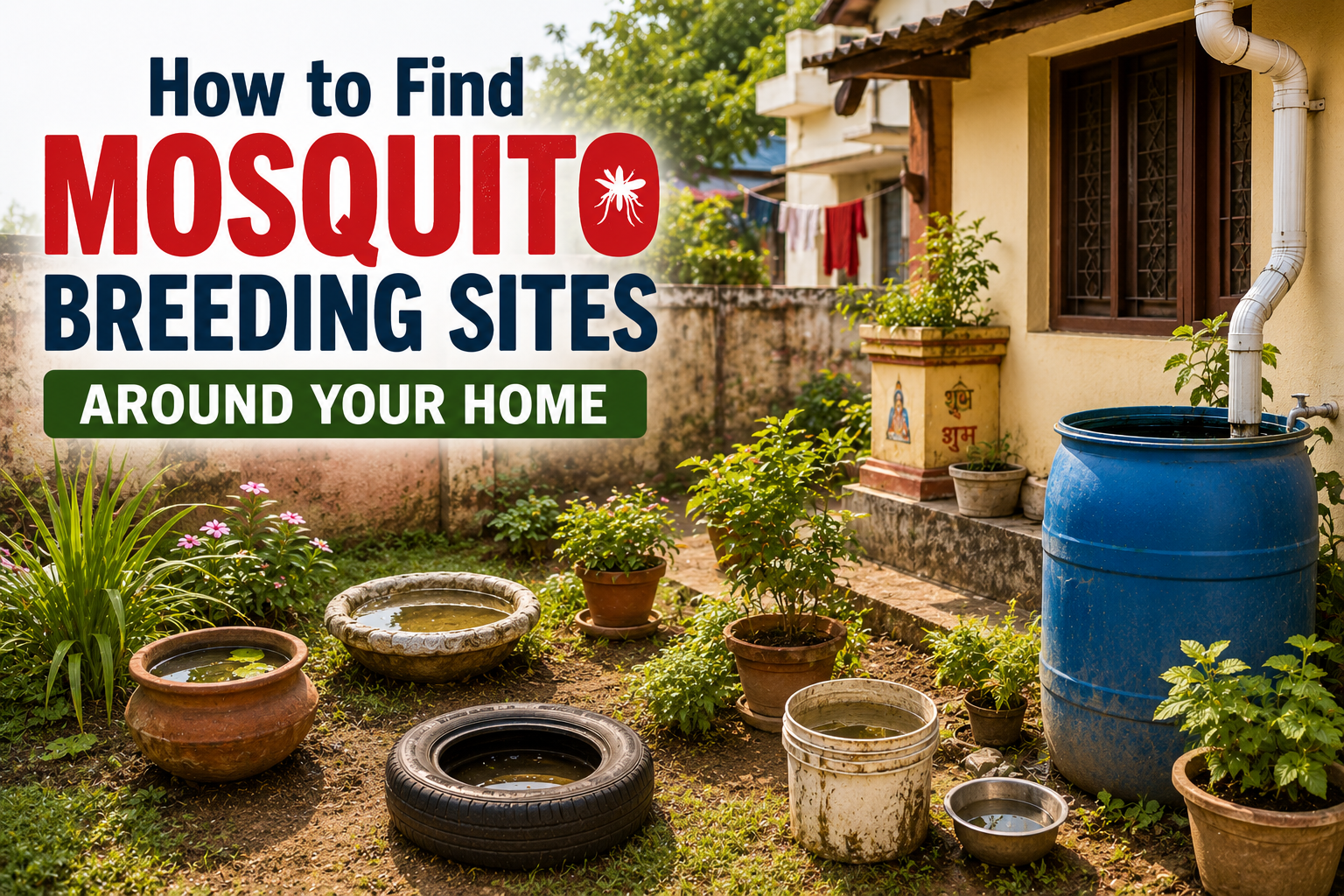
Mosquitoes do not need large ponds or lakes to breed. Below are some of the most common places where mosquitoes breed and how you can prevent them.
Flower Pots and Plant Saucers
Flower pots and plant saucers are among the most overlooked mosquito breeding sites. Excess water from watering plants often collects in the saucers beneath pots and can remain stagnant for several days. This creates an ideal environment for mosquitoes to lay eggs.
Signs to look for: Water sitting in saucers for long periods, algae growth, or small wriggling larvae in the water.
Prevention tips: Empty plant saucers regularly, avoid overwatering plants, and ensure proper drainage. If possible, fill unused saucers with sand to prevent water storage.
Water Storage Tanks and Containers
Many homes store water in tanks, barrels, and containers for daily use. If these storage units are left uncovered, they can quickly become mosquito breeding grounds.
Signs to look for: Open or poorly covered tanks, mosquitoes flying around water storage areas, and larvae visible on the water surface.
Prevention tips: Always keep water tanks tightly sealed with proper lids. Inspect them regularly for cracks or openings that may allow mosquitoes to enter.
Buckets, Drums, and Unused Containers
Unused buckets, drums, tubs, cans, and other containers often collect rainwater and provide perfect breeding conditions for mosquitoes.
Signs to look for: Water pooled inside containers left outdoors for extended periods.
Prevention tips: Store containers upside down when not in use. Dispose of unnecessary items and empty any collected water immediately after rainfall.
Roof Gutters and Drainage Systems
Roof gutters are designed to direct rainwater away from your home. However, leaves, dirt, and debris can block water flow and create stagnant pools where mosquitoes breed.
Signs to look for: Overflowing gutters, standing water, visible debris buildup, and increased mosquito activity around the roof area.
Prevention tips: Clean gutters regularly, especially during the rainy season. Ensure that downspouts and drainage systems are functioning properly to prevent water accumulation.
Old Tyres
Old and discarded tyres are well-known mosquito breeding sites because they easily collect rainwater. The dark interior of a tyre also provides a sheltered environment that protects mosquito eggs and larvae.
Signs to look for: Water trapped inside tyres and mosquito activity around storage areas.
Prevention tips: Dispose of old tyres properly or store them in covered locations where they cannot collect water. Drill drainage holes if tyres are being reused outdoors.
Bird Baths and Pet Water Bowls
Bird baths and pet water bowls can attract mosquitoes if the water is not changed regularly. Mosquitoes prefer still water, making these containers attractive breeding sites.
Signs to look for: Water left unchanged for several days and mosquito activity nearby.
Prevention tips: Replace water frequently and clean the containers thoroughly. Fresh water discourages mosquitoes from laying eggs.
Air Conditioner Drain Trays
Air conditioners produce condensation, which often collects in drain trays or nearby containers. These areas can become hidden mosquito breeding spots.
Signs to look for: Standing water beneath air conditioning units and damp areas that remain wet for long periods.
Prevention tips: Empty and clean drain trays regularly. Check drainage pipes to ensure water flows away properly without pooling.
Ponds and Decorative Water Features
Garden ponds, fountains, and decorative water features also encourage mosquito breeding if the water remains still.
Signs to look for: Mosquitoes hovering over the water surface and larvae in stagnant sections.
Prevention tips: Install pumps or fountains to keep water circulating. Regular maintenance helps prevent mosquitoes from laying eggs in these features.
Construction Areas
Construction sites often contain water-filled pits, containers, and building materials that collect rainwater. These areas can become major mosquito breeding grounds if left unattended.
Signs to look for: Standing water in excavation pits, plastic sheets, drums, and construction equipment.
Prevention tips: Drain accumulated water regularly and ensure the site remains clean. Cover materials that can collect rainwater whenever possible.
Blocked Drains and Sewage Areas
Blocked drains and sewage systems create stagnant water pools that attract mosquitoes and other pests. Poor drainage can allow water to remain undisturbed for long periods.
Signs to look for: Slow-draining water, foul odours, visible blockages, and mosquito activity around drains.
Prevention tips: Clean drains regularly and remove debris that may obstruct water flow. Repair damaged drainage systems promptly to prevent water from accumulating.
How to Inspect Your Property for Mosquito Breeding Sites
Regular property inspections are one of the most effective ways to prevent mosquito infestations.
Inspect Outdoor Areas
Start by walking around your property and checking all outdoor spaces. Look for buckets, flower pots, discarded containers, garden tools, toys, and any other objects that may collect water. Even a small amount of stagnant water can provide a suitable breeding environment for mosquitoes.
Check Hidden Corners and Shaded Spaces
Mosquitoes often prefer quiet, shaded, and undisturbed areas. Inspect places behind sheds, under decks, around dense bushes, and in storage areas that contain hidden water sources.
Examine Water Storage Areas
Carefully inspect water tanks, barrels, drums, and storage containers. Ensure that all containers are tightly covered and free from cracks or openings that could allow mosquitoes to access the water inside.
Inspect After Rainfall
Rainwater can collect in unexpected places such as roof gutters, old tyres, construction materials, and outdoor equipment. After every heavy rainfall, inspect your property to identify and remove any newly formed pools of standing water.
Perform Weekly Inspections
A weekly inspection routine is highly recommended because mosquitoes can complete their life cycle within a short period. Detect potential breeding sites early and maintain a mosquito-free environment around your home.
Signs Mosquitoes Are Breeding Near Your Home
Increased Mosquito Activity
One of the most obvious signs is a sudden increase in mosquitoes around your home. If you regularly see mosquitoes flying around your garden, balcony, or indoor spaces, especially in the early morning and evening hours, it may indicate a nearby breeding site.
Mosquito Larvae in Standing Water
Mosquito larvae are tiny, worm-like creatures that wriggle near the surface of stagnant water. Check flower pot saucers, buckets, drains, bird baths, and other water-holding containers for their presence.
Frequent Mosquito Bites
If family members are experiencing more mosquito bites than usual, it may suggest that mosquitoes are reproducing close to your home. Increased biting activity often means a larger mosquito population nearby.
Mosquitoes Resting in Dark Areas
Adult mosquitoes typically hide in cool, shaded, and humid places during the day. Inspect garages, storage rooms, under furniture, dense shrubs, and other dark corners where mosquitoes may be resting.
Effective Ways to Eliminate Mosquito Breeding Sites
Eliminating mosquito breeding sites is one of the most effective ways to reduce mosquito populations and protect your home from mosquito-borne diseases. Removing these breeding areas can lower the risk of an infestation.
Remove Standing Water
Regularly inspect your property and empty any containers that hold water, such as flower pot saucers, buckets, bird baths, and discarded items. Even a small amount of stagnant water can become a breeding ground for mosquitoes within a few days.
Cover Water Storage Containers
Water tanks, barrels, drums, and other storage containers should always be tightly covered. This prevents mosquitoes from accessing the water and laying their eggs. Check covers regularly to ensure there are no gaps or damage.
Clean Gutters Regularly
Leaves, dirt, and debris can block gutters and create stagnant water pools. Clean gutters on a regular basis to maintain proper water flow.
Improve Drainage Around the Property
Poor drainage can cause water to collect around your home after rainfall. Repair low-lying areas and blocked drainage systems to prevent standing water from accumulating.
Maintain Gardens and Landscaping
Trim overgrown plants, bushes, and shrubs regularly. Mosquitoes prefer cool, damp, and shaded environments where they can rest during the day.
Dispose of Unused Containers
Remove or properly store old buckets, bottles, cans, tyres, and other unused containers. Keeping your surroundings clutter-free helps eliminate places where rainwater can collect.
If mosquito problems continue despite regular maintenance, contact a professional mosquito pest control service in Kolkata. For severe problems, an expert can help you with a thorough inspection and treatment plan.
Seasonal Mosquito Prevention Tips
Mosquito activity changes throughout the year, but prevention should remain a priority in every season. Taking seasonal precautions can help reduce mosquito populations and prevent breeding before it becomes a serious problem.
During the Monsoon Season
The monsoon season is one of the most challenging times for mosquito control. Heavy rainfall creates numerous breeding sites as water collects in containers, drains, roof gutters, flower pots, and other outdoor areas. During this period, inspect your property frequently and remove any standing water as soon as possible. Regular cleaning and maintenance can significantly reduce breeding opportunities.
During Summer
Warm temperatures and increased humidity create ideal conditions for mosquito reproduction. Mosquitoes can complete their life cycle more quickly during summer, leading to rapid population growth. Pay special attention to water storage tanks, bird baths, pet water bowls, garden features, and air conditioner drain trays. Ensure water does not remain stagnant for extended periods.
During Winter
Although mosquito activity often decreases during winter, breeding can still occur in sheltered areas where conditions remain favourable. Continue checking water storage areas, drains, and hidden corners around your property. Consistent inspections throughout the year help prevent mosquito populations from increasing when the weather becomes warmer again.
When Should You Consider Professional Mosquito Control?
Recurring Mosquito Problems
If mosquitoes continue to return even after removing standing water and maintaining cleanliness, there may be hidden breeding sites that are difficult to locate without professional expertise.
Large Properties
Large residential properties often contain multiple outdoor areas, gardens, water features, and storage spaces where mosquitoes can breed unnoticed. A professional inspection identifies and addresses these problem areas effectively.
Apartment Complexes
Mosquito control in apartment buildings can be more challenging due to shared spaces, drainage systems, rooftops, and common areas. Professional treatment ensures a more comprehensive approach across the property.
Hidden Breeding Sites
Mosquitoes can breed in locations that homeowners may overlook, such as underground drains, concealed water collections, or inaccessible areas. Professionals have the tools and experience to identify these hidden sources.
High Mosquito Activity Despite Prevention Efforts
If mosquito numbers remain high despite regular prevention measures, a professional inspection and targeted treatment plan can eliminate the infestation. This also provides long-term protection for your home.
Conclusion
By inspecting your property and maintaining proper hygiene, you can create a mosquito-free environment for your family. Consistent prevention is the key to keeping mosquitoes under control throughout the year.