
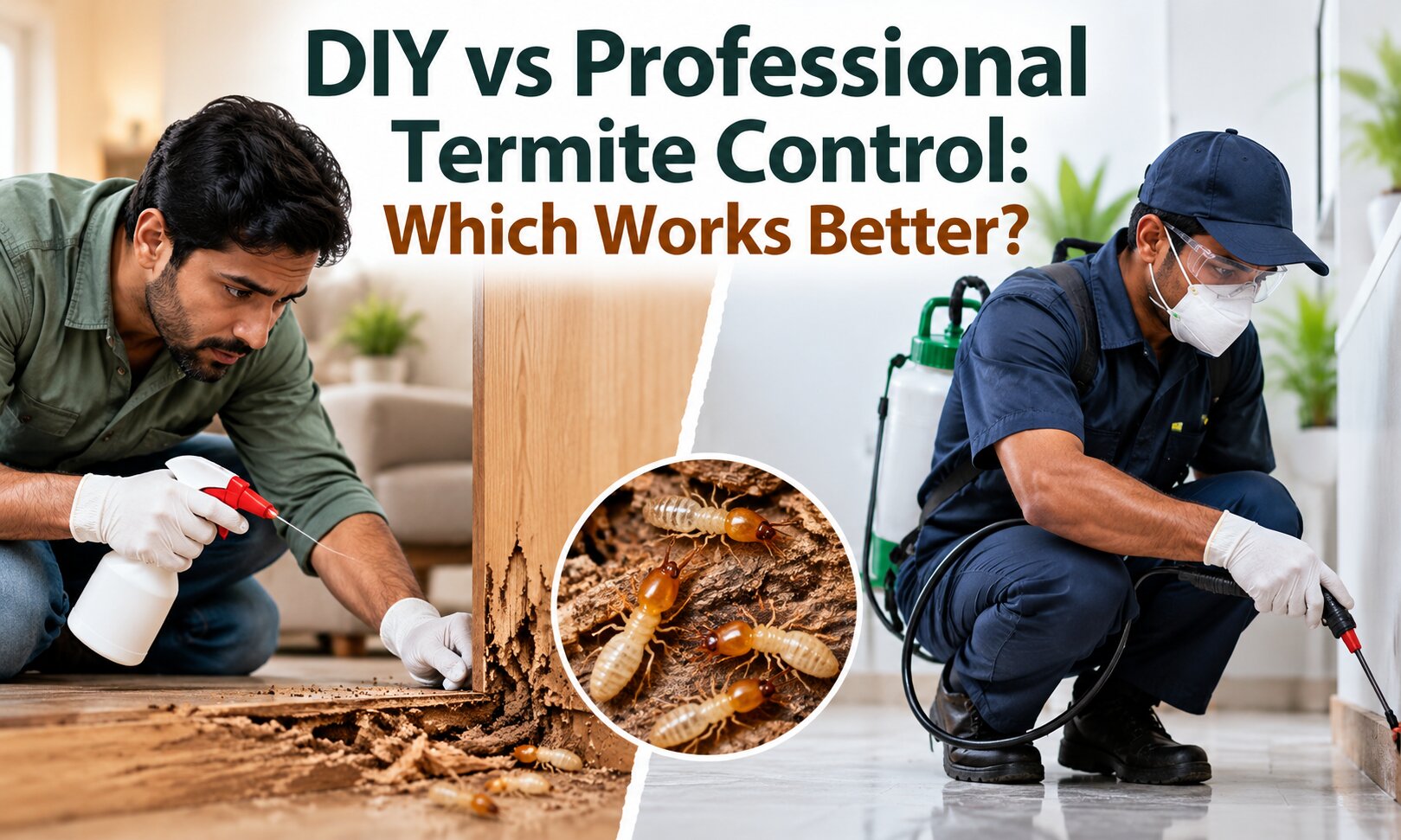
DIY vs Professional Termite Control: Which Works Better?
Termites are a common pest problem in Indian homes, offices, and commercial spaces. They can damage wooden furniture, doors, flooring, cupboards, and even parts of a building’s structure. The difficult part is that termites often stay hidden, so visible signs may appear only after damage has started. This makes many homeowners wonder whether DIY termite control is enough or whether they should hire a professional. Both options have benefits, but the right choice depends on the type and extent of the infestation. Let’s compare DIY and professional termite control to understand which option works better.
What Is DIY Termite Control?
DIY termite control means treating or preventing termite activity yourself, without hiring a professional pest control service. Homeowners can use products such as termite sprays, liquid treatments, bait stations, or wood treatments available in the market. Prevention, such as fixing leaks, reducing moisture, sealing cracks, and keeping wood away from damp areas, can also be part of DIY termite control. It may work for simple preventive care or very small, visible problems. However, termites often live inside walls, floors, soil, or wooden structures, where they cannot be easily seen. This makes complete DIY treatment difficult when an infestation is established.
Pros and Cons of DIY
DIY termite control can be attractive because it is easy to start and usually costs less initially. Homeowners can buy products, treat accessible areas, and take preventive steps without waiting for a service appointment. It can also be useful for regular inspection and early action.
However, DIY treatment has limitations. A spray may kill visible termites without reaching the colony. It can be difficult to identify hidden activity or understand how far an infestation has spread. Incorrect product selection or application may reduce effectiveness and create safety concerns. Most importantly, treating only the visible area may allow termites to continue damaging the property elsewhere. If termite activity keeps returning, repeated DIY treatment can delay proper inspection and allow the damage to become more serious. Therefore, DIY methods are better suited to prevention and minor issues than established infestations. It also gives homeowners control over inspections and timing. Useful for prevention.
What Is Professional Termite Control?
Professional termite control involves trained pest control experts inspecting the property and choosing a suitable treatment based on the infestation. Instead of treating only visible termites, professionals look for signs of hidden activity, entry points, moisture problems, and areas at risk of further damage.
Depending on the property and infestation, professional termite treatment may include liquid treatments, baiting systems, wood treatments, or a combination of methods. Professionals also know where and how treatments should be applied. This makes professional termite control especially useful for established, hidden, widespread, or recurring infestations. In India, professional pest control can help protect homes, apartments, offices, shops, warehouses, and other properties from costly termite damage. This approach helps when termite activity is hidden or recurring.
DIY vs Professional: What are the Key Differences
The main difference between DIY and professional termite control is the level of inspection, expertise, and treatment. With DIY termite control, homeowners generally identify the problem themselves and use products available in the market. This can be convenient and affordable for basic prevention, but hidden termite activity can be difficult to find. Professional termite control starts with a detailed inspection to identify signs of infestation and possible sources of the problem.
Another key difference is treatment. DIY methods may focus on the visible area, while professionals can choose a treatment approach based on the location and extent of termite activity. Professional services may also provide follow-up monitoring or preventive recommendations. DIY treatment usually has a lower upfront cost, but an unsuccessful treatment can lead to repeated spending and continued property damage. Professional treatment may cost more initially, but it can offer a more complete approach when the infestation is established. For Indian homes and buildings, the best option depends on the severity of the infestation, the affected areas, and the risk of further damage. This is useful for Indian properties.
When DIY May Be Enough
DIY termite control may be enough when you are focused mainly on prevention or when termite activity is very limited and confined to an easily accessible, non-structural item. Regularly checking wooden furniture, cupboards, doors, window frames, and flooring can help you spot early signs. You can also reduce moisture, repair leaks, improve ventilation, remove old cardboard or wood, and seal suitable cracks around the property. If there is no confirmed infestation, these steps can be useful. However, keep monitoring the area. If termites appear again, spread to other areas, or cause visible damage, arrange a professional inspection. Check these areas.
When to Call a Professional to Control Termites
You should consider professional termite control when you notice clear or repeated signs of an infestation. These may include mud tubes, discarded wings, hollow-sounding wood, visible termite damage, or termite activity in several areas of the property. Professional help is particularly important when termites may be affecting wooden beams, flooring, walls, door frames, or other structural parts of a building.
A recurring infestation is another reason to call a professional. If DIY sprays or treatments provide only temporary results, the colony or entry point may still be active. A professional can inspect the property and recommend the right treatment. Seek expert help if you are unsure whether the pest is actually a termite, since different pests require different control methods.
Which Works Better?
So, which works better: DIY or professional termite control? The answer depends. For prevention and very minor, accessible problems, DIY termite control can be useful. Simple steps such as reducing moisture, checking wooden areas, and following product instructions can help protect your property.
For an established, hidden, widespread, or recurring infestation, professional termite control is generally the better option. Termite control is not only about killing the insects you can see. The source, colony activity, and affected areas also need attention. Professional inspection and treatment can help address the problem more thoroughly and reduce the risk of continued damage.
If you are unsure about termite activity, a professional inspection can help you make an informed decision. Inspection is important here.
Prevention Tips
Good termite prevention starts with keeping your property dry, clean, and inspected. Fix leaking taps, pipes, roofs, and drainage issues as soon as possible because moisture can favour termite activity. Keep wooden materials, cardboard, and paper away from damp areas and avoid unnecessary wood-to-soil contact where possible. Ensure proper ventilation in storage areas and other moisture-prone spaces.
Inspect wooden furniture, cupboards, doors, window frames, flooring, and other vulnerable areas regularly. Look for mud tubes, discarded wings, hollow wood, or small holes. Seal cracks and gaps around the property, and consider professional inspections if your home has a history of infestation.
Wrapping Up
DIY termite control can help with prevention and minor issues, but it may not be enough for a hidden or established infestation. Professional termite control offers expert inspection and targeted treatment based on termite activity. If you notice repeated signs, widespread damage, or termites in structural areas, professional help is usually the better choice. Early action can help protect your property and prevent a small termite problem from becoming larger.